
 by admin
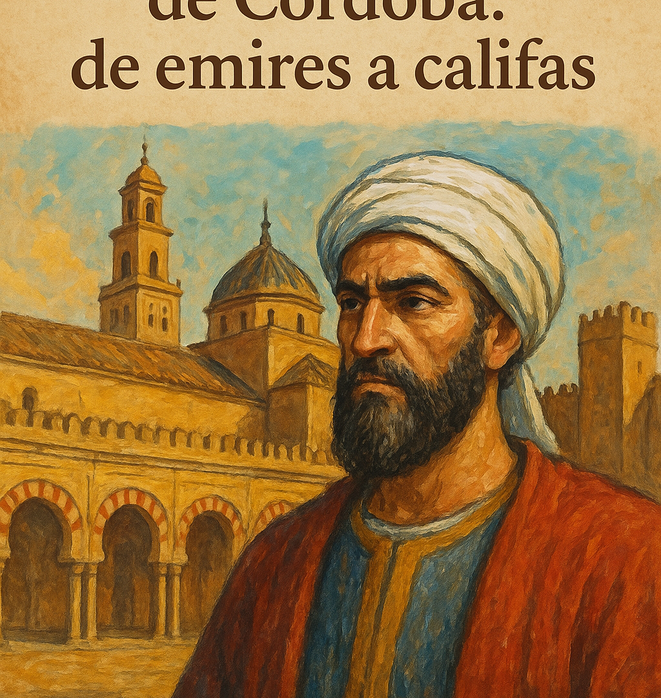
The Umayyad dynasty is undoubtedly one of the cornerstones of Córdoba’s history, ushering in a period of cultural, political and architectural splendour that left an indelible mark on the city and on the Islamic world. This article looks at the rise of the Umayyad emirs and their transformation into caliphs, and at their impact on the Córdoba we know today.
Origins of the Umayyad dynasty
The Umayyad dynasty has its roots in Arabia and emerged in the 7th century, after the death of the Prophet Muhammad.
Its real rise came under Muawiya ibn Abi Sufyan, who founded the dynasty in 661 AD, after the schism that divided the Muslim community.
Arrival in the Iberian Peninsula
Umayyad armies reached the Iberian Peninsula in 711 AD, led by Tariq ibn Ziyad. This event marked the beginning of the Muslim conquest of the peninsula, which eventually consolidated power in Córdoba, where a government was established that would last for centuries.
The era of the emirs in Córdoba
At first, the Umayyad rulers of Córdoba held the title of emir. Although they governed, their power was initially limited; however, as authority became more centralised, the emirs of Córdoba gained ever greater power.
The emirate of Abd al-Rahman I
Abd al-Rahman I, the first emir of Córdoba, arrived from Damascus after the fall of his family. He launched a series of political and cultural reforms that transformed the region. His reign brought peace and stability, which allowed an unprecedented cultural flowering.
The caliphs of Córdoba
The transformation of the emirs into caliphs was formalised when Abd al-Rahman III proclaimed himself caliph in 929 AD, turning the emirate into a caliphate. This change was a symbol of power and full independence from the East.
The caliphate’s impact on culture
The Caliphate of Córdoba was a turning point in the cultural and scientific history of the world. Schools and libraries were founded and the translation of texts was encouraged, creating an environment in which science and the arts flourished.
Umayyad architecture in Córdoba
One of the most notable aspects of the Umayyad dynasty is its architectural legacy, which remains a symbol of Córdoba. The Mosque-Cathedral is perhaps the most representative example of the wealth and ingenuity of this era.
The Mosque-Cathedral: an icon
The Mosque-Cathedral of Córdoba reflects the splendour of the Umayyad era. This vast building, an architectural masterpiece, combines elements of Roman and Visigothic origin with Islamic features.
Córdoba as an intellectual centre
Under the Umayyad caliphate, Córdoba became a highly influential intellectual centre. The city attracted thinkers and scholars from all over the world and contributed to the advancement of knowledge in fields such as medicine, astronomy and philosophy.
Outstanding scholarly achievements
The translation and copying of works from classical antiquity in Córdoba fostered cultural exchange and helped preserve and advance knowledge, a legacy that later centres of translation would build upon.
Tips for your visit
If you are planning to visit the historic sites linked to the Umayyad dynasty in Córdoba, here are some tips to make the most of it:
- Plan your visit at quieter times to enjoy the monuments more peacefully.
- Consider joining a guided tour that specialises in Umayyad history for a deeper understanding.
- Wear comfortable shoes, as there is a lot of walking ahead.
- Don’t forget your camera: Umayyad architecture offers countless photo opportunities.
Frequently asked questions
When did the caliphate begin in Córdoba?
The caliphate in Córdoba began in 929 AD, when Abd al-Rahman III proclaimed himself caliph.
What other important buildings survive from the Umayyad period?
Besides the Mosque-Cathedral, examples include Medina Azahara, the Alcázar area and various palaces and Arab baths.
Can you visit the ancient libraries of Córdoba?
The original libraries no longer exist, but you can visit modern institutions that bear their name and honour their legacy.
How did the Umayyad dynasty influence Spanish culture?
Its influence can be seen in the architecture, the language and many cultural traditions that survive in Spain today.
Conclusion
The Umayyad dynasty left a lasting legacy in Córdoba and in the Islamic world, turning the city into a beacon of culture and innovation. Don’t miss the chance to explore the monuments and sites linked to this fascinating history. Book your guided tour and immerse yourself in the splendour of the Umayyad era.
To learn more about the dynasty’s first caliph, read our profile of Abd al-Rahman III, the caliph who founded Medina Azahara.


