
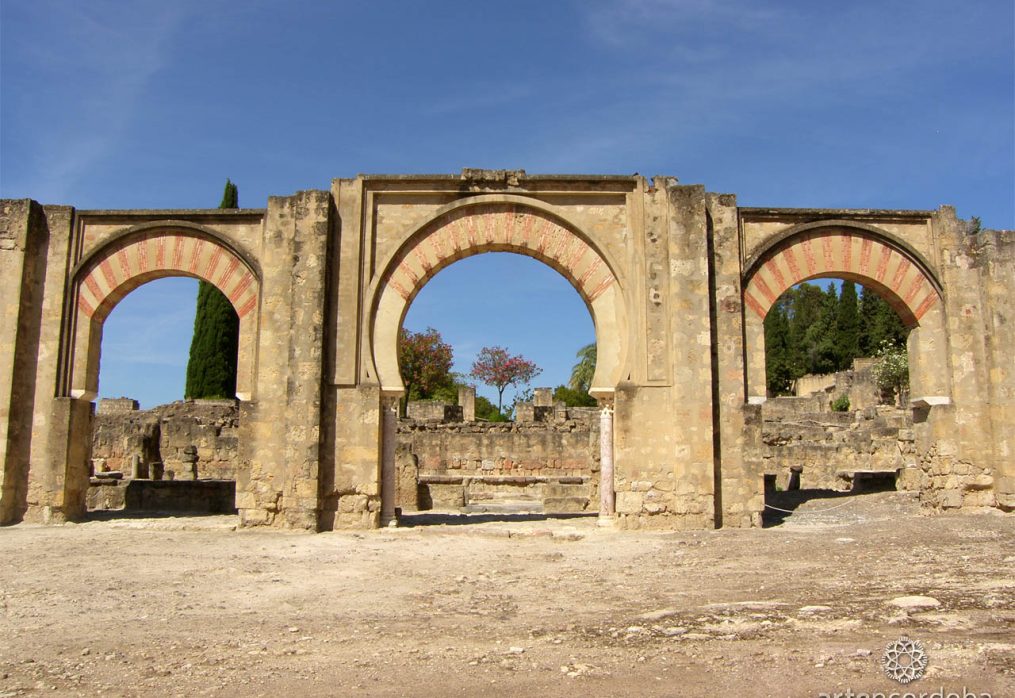
 by admin
What is the Medina Azahara meaning? The most common translation is “the radiant city”, but almost every visitor arrives with a different story in mind: a caliph who built a city for his favourite. Here we separate what the sources say from what legend added, and explain what historians suggest today about the name.
What does Medina Azahara mean?
“Medina Azahara” is the Spanish form of Madinat al-Zahra. The first word is no mystery: madina means city. The second is the interesting one.
Radiant, shining or flowering
The form al-zahra is usually translated as “the radiant”, “the shining” or “the luminous”. You will also find “the flowering city”, because in Arabic this family of words is linked both to brightness and to flowers. It is also where the Spanish word azahar (orange blossom) comes from, although the blossom has nothing to do with the name of the city: it is just a linguistic kinship that feeds the confusion.
That is why there is no single correct translation. What matters is the idea behind it: light, splendour and prestige, exactly what caliphal power wanted to project.
A name fit for a capital
Historical sources date the city’s foundation to 936, although major building work may have taken a few years to get going. Abd al-Rahman III had proclaimed himself caliph in 929 and needed a seat worthy of the title. The name was as much a part of the message as the marble columns or the reception halls.
The legend of Zahra, the caliph’s favourite
The popular version is as charming as it is hard to prove: Abd al-Rahman III supposedly built the city in honour of his favourite woman, called Zahra, and named it after her. It is even said that a statue of her stood over the entrance.
Where the story comes from
The tale was recorded by the writer al-Maqqari, who worked between the 16th and 17th centuries, in other words almost seven centuries later. He did not necessarily invent it, but he passed it on as an existing tradition. Variants appeared over time: in some Zahra dreams of the city, in others she dies before seeing it finished, and in some she is a young woman from Granada.
That lack of agreement is a clue in itself. When a story changes this much from one version to another, it is usually closer to literature than to historical memory. If you enjoy these tales, we have a full article on the myths and legends of Medina Azahara.
The statue in doubt
Art historian Marianne Barrucand considers that particular statue unlikely to have existed, although the city did have sculpture. It is an important nuance: Medina Azahara had surprising figurative pieces, such as its famous bronze deer, so the idea is not absurd in itself, but there is no evidence for that image over the gate.
What historians propose today
Current research looks for the explanation in politics rather than romance. Two hypotheses stand out, and they do not exclude each other.
A fashion among caliphal capitals
Archaeologist Felix Arnold offers a simple explanation: the name follows the pattern of other caliphal cities, such as Madinat as-Salam (“the city of peace”), the official name of Abbasid Baghdad, or Madinat al-Qahira, the future Fatimid Cairo. Giving a capital a glorious adjective was a way of speaking the same language as the great powers of Islam.
A reply to the Fatimids
Jonathan Bloom suggests a sharper reading. The Fatimids, rivals of the Umayyads in North Africa, claimed descent from Fatima, the daughter of Muhammad, also known as al-Zahra. Giving the new city that name would have been a direct retort: contesting a title loaded with legitimacy. To understand that struggle, it helps to read about the Umayyad dynasty of Córdoba.
Why the legend has survived
After it was sacked and abandoned in the early 11th century, during the civil war that ended the caliphate, the city literally disappeared from view. For centuries its remains were known as Córdoba la Vieja (Old Córdoba), and modern excavations did not begin until 1911. With the site buried, it was easy for a love story to take the place of real history.
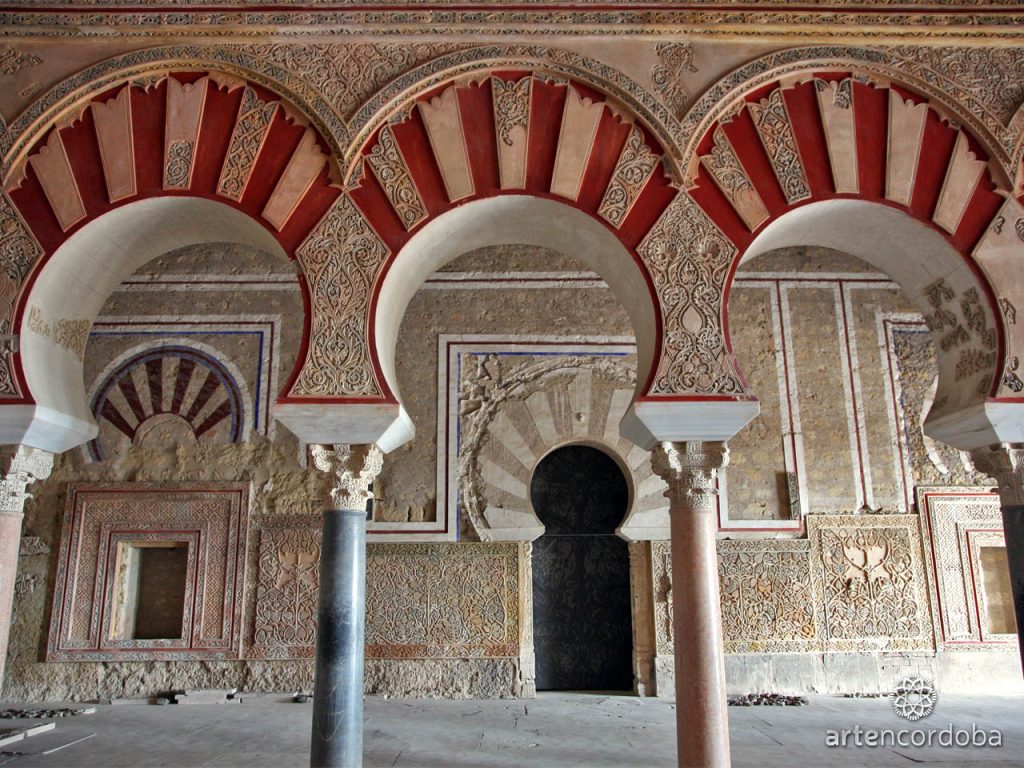
The legend also has everything a good story needs: a powerful ruler, a beloved woman and a fleeting city. None of this takes anything away from what you can see today. Quite the opposite: step into the remains of the Salón Rico and you will see that the real star of this place was political ambition, expressed in stone, marble and light.
Frequently asked questions about the meaning of Medina Azahara
What does Medina Azahara mean in English?
Medina Azahara comes from Madinat al-Zahra, usually translated as “the radiant city” or “the shining city”. You may also see “the flowering city”, because in Arabic this family of words is associated with both brightness and flowers. There is no single translation accepted by everyone.
Who was Zahra, the favourite of Abd al-Rahman III?
She is the heroine of a popular tradition according to which the caliph built the city in her honour. Al-Maqqari recorded the story centuries after the foundation, and its versions do not agree with each other. There is no solid evidence that the city was named after this woman.
Is the name Medina Azahara related to orange blossom?
Only indirectly. The Spanish word azahar and the city’s name share an Arabic origin, but the city is not named after the orange blossom. Specialists link the name to the idea of splendour and to the political rivalry between the Caliphate of Córdoba and other dynasties of its time.
Why was it called Córdoba la Vieja?
Because for centuries after the city was abandoned in the 11th century, the exact memory of what it had been was lost. The remains emerging on the slopes of the Sierra Morena were known by this popular name, until research and the excavations begun in 1911 identified them as the caliphal city.
The meaning of Medina Azahara says a lot about the man who dreamed it up: a caliph determined to outshine his rivals. If you would like to explore its remains with someone who can tell these stories on site, join our guided tour of Medina Azahara.


